When change has impact, what duty do we owe others?
An introspection of recent work that has left me ethically and philosophically unsure. When changes you make have material impacts on others, what duties do we owe them, and where does that line stop?
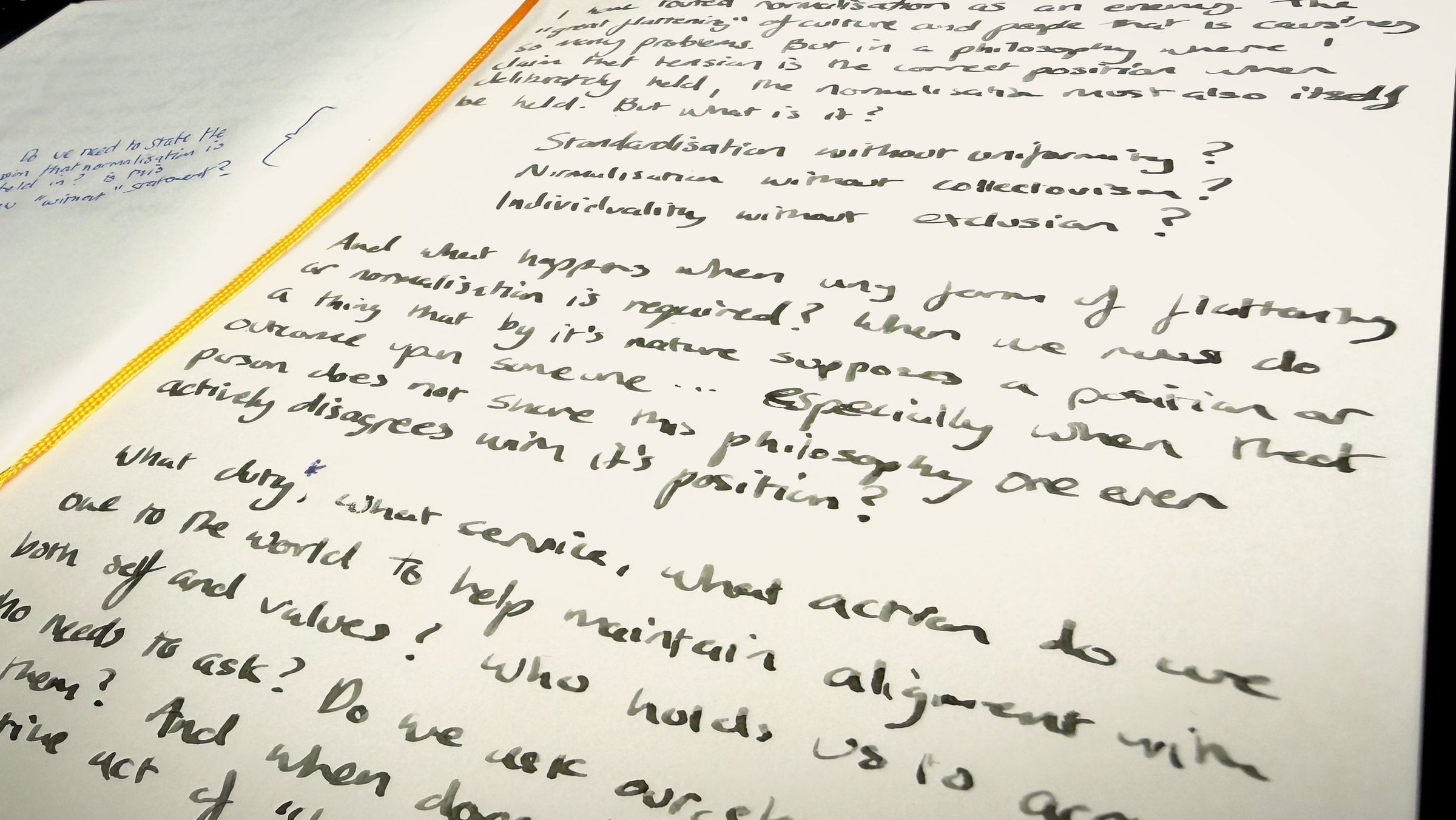
What this is for
This article and question touch on a few things; Strength without cruelty, Leadership without entitlement, and maybe even Vulnerability without collapse and Optimisation without suppression. But really … it’s mostly an assessment and understanding of the duties we owe to others. Here is my lived experience and my analysis of what it was. I’m open to your critique and input, without stimulus I cannot grow.
The situation
Change is hard, as is leadership. I was brought in to help turn a company around that had its back against the wall, one last fiscal year left of fight in it. A real turnaround scenario. It became clear to me that the structure of the teams, and the makeup of the roles within it, was not suited to helping them escape the trap they had found themselves in (I’d dare say of their own making, but I try to reserve judgement of decisions made that I can’t see and never felt). So I made changes, and with that change came a duty to those within it …
The change
We restructured. We created new teams. We designed a new stripped-back way of working that built in the behaviours it needed to stand a chance of survival (but discussion of this is not the purpose of this article). With these changes came the impact on people. Roles were no longer needed. The skills these people possessed served no purpose within the new “design”. I became the grim reaper of their jobs … a duty no person enjoys, but one that was necessary to help try and secure the future of the company.
So there sits my first question and internal debate. I had to force upon others a change in which they had no control, that had material impact on their lives, removing their ability to choose for themselves. That feels awfully like cruelty and domination.
Was it (and is it) convenient for me to hide behind the ethical curtain of making this change to protect the jobs and futures of many more? …
There is a question hiding here
Can it be true that my role is to protect the business, which is employee-owned, and to therefore protect the employees without it also being true that I owe that same protection to each person in isolation?
I don’t think so … sure it helps ease my conscience … but I do fully believe it was a necessary choice. After all, I was brought in to help secure the future of an employee-owned business and therefore to protect a future for its employee-owners. So when people performing their jobs impeccably, at the capacity for which they were intended, in the way they were designed, do not support that goal … and arguably conflict with it … you have to remove the person from the role, and remove the role from the business, or you can never make a decision. Which would itself lead to paralysis, and to immotion.
Which brings me into the next part, the part this piece is really for … what duties do I then owe them? … the people impacted this way, especially given the paradox of being both the person brought in to protect them, and the executioner of their position within it. Some things are clear and obvious; A fair and honest process, a clear explanation of why the change has been made. But others are less clear …
- Do I owe them proactive support in finding a new role, because this is change I led, or does the company owe them that? … both parties? … or even none?
- Do I owe them an apology? Is this an ethical line, should I apologise for the decision, or is the explanation of the reason enough? Or should I apologise for the impact on them without apologising for the outcome, which could come across as performative and without substance or ownership.
What things here blur the line of failing to hold strength without cruelty, and leadership without entitlement?
It weighs heavy on my mind the need to perform these duties, to know that I have had an impact on someone’s life … I have been in that seat, I have been the person without a role, left with the worries about money, about finding work, trying to hold together emotions of sadness and anger and betrayal … I have felt those things even though I know these things are not personal, they are not a reflection of the person or their contributions … but hell does that help at the time.
The conflict
Which leads me to the conflicts I continue to inspect and understand;
- It is my duty as a leader in a business to protect that business and do what is best for it.
- It is my duty as a leader of people to protect those people and help them as individuals
- It is my duty as a person with power, to wield that power with responsibility
- It is my duty as an instigator of change to look beyond the initial impact to understand the downstream effects
- It is my duty as a human to help protect other humans from undue cruelty
Holding those tensions is hard … this experience has shown me that. There are questions I will continue to ask myself about this experience, and will likely never have a resolute answer for;
- Did I handle the communication of change well?
- Did I really do everything I could to protect and help the people in my charge who both stayed, and left as a result?
- Did I really do what was best for the company, the people, or both?
I had to make decisions, I had to take action. So I combined the knowledge and evidence I had, the experience from similar scenarios in the past, conversations with trusted (external) colleagues who have experienced similar scenarios … and acted. To protect the long-term interests of the business (and the employee-owners) as I was brought in to do.
I believe I did what I could with what I had; I was as honest as I could be, I held the needs of the company and the needs of the employees as best I could manage, and most importantly … I have tried to do what I can to support those most negatively impacted, even though they may never know it. I reached out to recruiters, I messaged my network, I attempted to make connections. I placed these duties upon myself, and performed them, they were not requested of me. Those whom my decision impacted will likely never know that, but I hope it helped … and similarly I will probably never know the answer to that. But mostly, I hope I have acted in a way that I will look back on and be comfortable with.
Because right now, I don’t know if my introspection and unease is because I haven’t … even though I can’t say why. Or is simply an artefact of being human, having empathy, and needing to perform a duty that is at its core, an unpleasant one to do.
I’ll close with the same question I opened, because it remains unresolved for me right now, and more importantly the piece I still ponder most …
When change has impact, what duty do we owe others … and where does that line stop?